

Finding a handful of old coins in a drawer can feel like holding a little mystery in your palm. Some are worth exactly what their face value says. Others carry stories and hidden premiums that can surprise you. This article walks you through how to examine, identify, and estimate the value of old coin value app without jargon, with practical steps you can follow today.
Why coin value goes beyond the date
When people ask “How much is this coin worth?” they’re often expecting a single number. The truth is more layered: a coin’s market value depends on several interacting factors, not just the year stamped on it. Think of it as a recipe—metal content, rarity, condition, and buyer interest all blend to set a price.
Metal content matters when silver or gold is involved. Rarity matters when fewer surviving examples exist. Condition matters because collectors pay more for well-preserved coins. Demand matters because a popular series or a hot error can drive prices up. I’ll unpack each factor so you can evaluate coins with confidence.
Factor 1 — Metal and intrinsic value
Some coins are valuable for the metal they contain. U.S. dimes, quarters, and half dollars minted before 1965 are 90% silver, which gives them an intrinsic value tied to the silver market. Gold coins follow the same principle, but their collector value often far outstrips melt value.
Be careful: metal value sets a floor—what a coin is worth if it gets melted—but collector value is usually higher. You rarely want to melt collectible coins because their numismatic (collector) value can be significantly greater than metal value.
Factor 2 — Rarity and mintage
Some coins were minted in small numbers or most were lost, making surviving examples rare. Other coins were produced by the millions and are common in circulation. Rarity isn’t only about the number minted; survival rate and historical events also shape rarity. For instance, coins saved in mint bags, hoards, or by collectors often survive in better condition than those that circulated.
Mint marks (letters indicating where a coin was struck, like D for Denver, S for San Francisco) can create variations in scarcity. A 1955 coin from one mint might be common, while the same date from a different mint could be worth more.
Factor 3 — Condition and grading
Condition is the language collectors use most. A coin’s grade describes how worn it is. Small changes in grade can mean big differences in price. A crisp, uncirculated example will be worth far more than the same coin that’s been worn smooth by decades of pocket change.
There’s a standardized grading scale (we’ll cover it in a table below), and professional graders assign precise grades that greatly influence resale value. You can get a good rough sense of condition at home, but for high-value coins, professional grading adds buyer confidence and often improves sale prices.
Factor 4 — Demand and trends
Collector interest fluctuates. A certain series may be wildly popular one year and less so the next. Market trends, anniversaries, movies, or celebrity collecting habits can influence demand. That means the same coin could be worth different sums to different buyers at different times.
If a coin features a famous error (like a doubled die), it might attract die-hard error collectors willing to pay a premium. Retail marketplaces and auction results are the best place to check recent demand and price trends.
Step-by-step: How to check the value of an old coin
Follow these steps in order to get a realistic estimate of value without paying for unnecessary services.
- Handle carefully. Always hold a coin by its rim to avoid fingerprints. Natural oils from your skin can damage delicate surfaces.
- Use magnification and good light. A 5x–10x loupe or magnifier and a bright lamp reveal details like mint marks, full rims, and small errors.
- Identify basic facts. Note the country, denomination, date, and any mint marks. For U.S. coins, mint marks are usually on the obverse or reverse depending on series.
- Check metal content. Pre-1965 U.S. dimes and quarters and pre-1965 half dollars are 90% silver; Kennedy halves from 1965–1970 are 40% silver. Pennies minted before 1982 are mostly copper. For non-U.S. coins, look up composition by year and type.
- Assess condition. Compare the coin to photos in price guides or online auctions to decide if it’s circulated, uncirculated, or somewhere in between.
- Search for known key dates and errors. Some dates and errors are worth multiples of a common example—check reference materials.
- Check price guides and completed sales. Use online price guides for a baseline and then look at recent completed sales on auction sites to see what collectors actually paid.
- Decide whether professional grading or selling privately makes sense. Low-value coins do not need grading. High-value coins often benefit from third-party authentication.
Where to look for answers: tools and resources
Your confidence comes from reliable sources. Here’s a compact toolkit you can use at home and online.
- Physical references: The A Guide Book of United States Coins (Red Book) is a longtime staple for U.S. collectors. Specialized series guides cover world coins and specific issues.
- Online price guides: Sites like PCGS Price Guide and NGC Price Guide provide valuation ranges and are updated with market trends. They’re especially useful for graded coins.
- Auction results: Check completed listings on eBay and numismatic auction houses for real-world sale prices—filter by “sold items” or “completed auctions” to avoid asking prices.
- Coin forums and communities: Reputable forums, local coin clubs, and social media groups can be useful for identification help, but treat valuations from anonymous posters cautiously.
- Professional grading services: PCGS and NGC are the largest third-party grading services. They authenticate coins, assign grades, and place coins in tamper-evident holders (slabs).
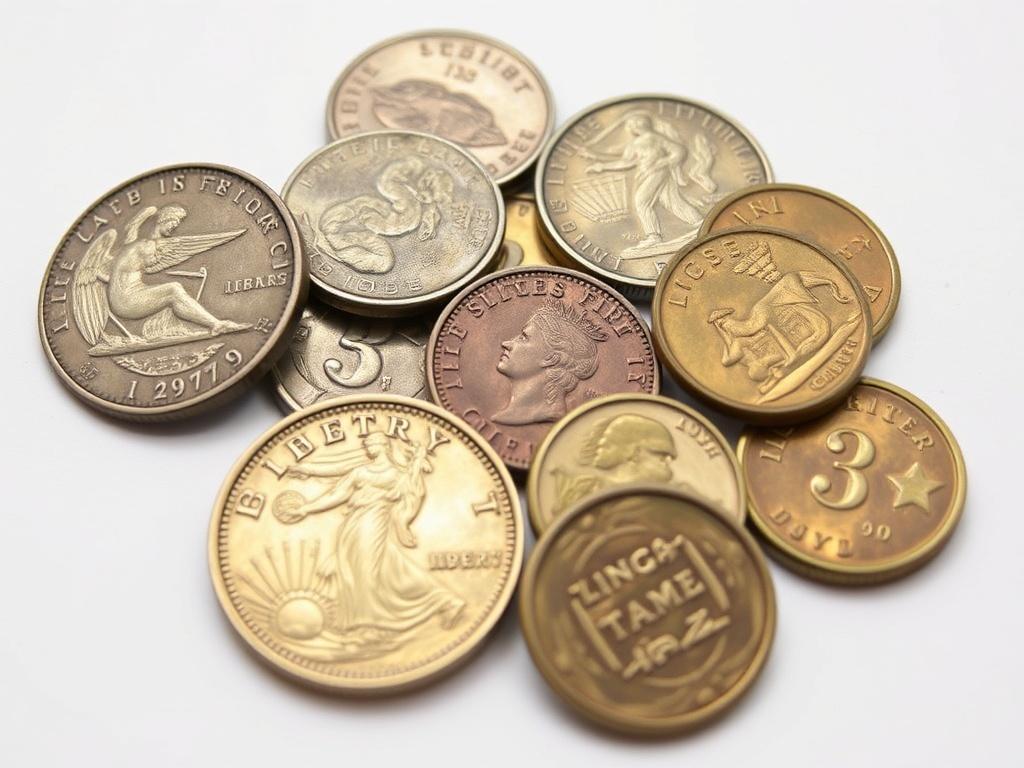
Quick visual check-list
Before you dig into price guides, run this quick checklist to see if a coin deserves closer attention.
- Is there a mint mark and is it unusual?
- Does the date match any known “key date” lists for the series?
- Is the coin sharply struck with clear details (possible high-grade)?
- Are there any machine or mint errors (double dies, off-center strikes, clipped planchets)?
- Does the coin have obvious damage or cleaning marks that lower value?
Understanding grades: a simple table
Grades can feel like a foreign language. This table summarizes common descriptive grades and what they mean so you can estimate a coin’s condition without becoming an expert grader.
| Grade (Common Term) | Abbreviation | Description | What to expect in value |
|---|---|---|---|
| Good | G | Heavily worn; major design elements visible but flattened. | Low collector premium; often close to melt or face value. |
| Very Fine | VF | Moderate wear; most details visible though softened. | Higher than G but modest; popular dates can command more. |
| Extremely Fine | XF or EF | Light wear on high points; sharp overall look. | Notable premium for attractive examples. |
| Uncirculated | MS (Mint State) | No wear; may have handling marks. Numbers go from MS60–MS70. | Significant premiums, especially as the grade nears MS65–MS70. |
| Proof | PR | Special strikes made for collectors, usually with mirrored fields and frosted devices. | Proofs can be very desirable and often command higher prices than business strikes. |
Common series and what collectors look for
Different coin families attract different buyers. Below are some well-known U.S. series and the characteristics that commonly increase their value.
| Series | Key features to check | Typical things that increase value |
|---|---|---|
| Lincoln Cent (1909–present) | Look for mint marks, 1909-S VDB, and early wheat cents (1909–1958). | Key dates, mint-state condition, and error coins (double die obverse). |
| Buffalo Nickel (1913–1938) | Full date and mint mark are crucial; check for die varieties. | High-grade examples and rare date/mint combinations. |
| Mercury Dime (1916–1945) | Look for full winged-fasces detail; 1916-D is a key date. | Clear devices, original luster, and scarcity in higher grades. |
| Morgan Dollar (1878–1904, 1921) | Mint mark on reverse, many special varieties and Carson City (CC) mint makes some dates valuable. | Low-mintage dates, Carson City pieces, and uncirculated examples. |
Note on non-U.S. coins
World coins follow the same principles—identify, check composition, assess rarity, and compare recent sales. Specialized catalogs and forums often focus on individual countries and can be invaluable for obscure issues.
When to get a coin professionally graded
Professional grading makes sense when the expected increase in sale price outweighs the grading fee and wait time. Typical situations that justify grading include:
- High-value coins where precision matters (rare dates in near-mint condition).
- Coins that may be counterfeited or altered—grading services authenticate them.
- Items intended for auction or a major sale—graded coins attract more buyers.
Grading services like PCGS and NGC encapsulate the coin and provide a guarantee of authenticity. They also track populations (how many coins of a certain grade exist), which can affect desirability.
How grading affects price — a general rule
For many collectible coins, pricing increases exponentially near the top of the grade scale. That means an MS65 coin could be several times more valuable than an MS62 example. Always compare like-for-like: a graded coin’s price should be compared with other graded coins of the same grade.
Practical tips to avoid mistakes and scams
Scams exist in every hobby. Here are practical rules to keep your money and coins safe.
- Don’t sell high-value coins for “melt only” if they have numismatic worth; get a second opinion.
- Avoid buying or selling based on unverified online listings—check completed sales and use platforms with buyer protection.
- Be wary of dramatic “instant wealth” claims for common coins. If it sounds too good to be true, it probably is.
- Learn basic authentication: unusual weight, color, or magnetism can reveal fakes. Many counterfeit gold coins differ subtly in weight.
- Work with reputable dealers and ask for references. Local coin clubs and the Numismatic Guaranty Corporation (NGC) and Professional Coin Grading Service (PCGS) dealer directories are good starting points.
Sample valuation approach: estimating value at home
Here’s a realistic approach you can use to get a working estimate without paying for grading.
- Identify the coin’s series, denomination, and date. Photograph it from both sides under good light.
- Check its metal content and weigh it if you have a precise scale (small differences can indicate counterfeit metals).
- Compare to online price guides for the series and date; note the range for similar condition.
- Look at completed auction sales of the same date, mint mark, and obvious condition level.
- If the coin seems rare or high-grade, consult a reputable dealer or consider grading.
Example case — what to do with a 1943 Lincoln cent
Imagine you find a 1943 penny: most 1943 U.S. cents are steel-coated zinc because copper was reserved for the war effort. A copper 1943 is a famous rarity and can be worth a lot. Before assuming it’s valuable, check weight and magnetism: the steel cents are slightly magnetic and lighter. A copper example will not stick to a magnet and will weigh more. That initial testing helps decide whether to call a professional.
Quick reference: common cheap vs potentially valuable categories
This table groups common outcomes to give you a quick sense of what to expect when you pick up an old coin.
| Category | Typical examples | What to expect |
|---|---|---|
| Common, circulated | Most 20th-century coins in heavy circulation | Usually worth face value or small premium; save for collections, not profit. |
| Silver or gold content | Pre-1965 dimes/quarters; pre-1971 foreign silver; small gold coins | Worth at least metal value; collectible examples may be worth much more. |
| Key dates and mint rarities | Known “key date” coins in a series | Can be orders of magnitude more valuable than common dates. |
| Error coins | Double dies, off-center, clipped planchets | Collector interest varies; clear errors can command strong premiums. |
Where to sell or get a second opinion
If you decide to sell, choose the outlet that matches your coin’s profile. For everyday coins, local buyers or online marketplaces work fine. For high-value or rare examples, auction houses and specialist dealers reach collectors willing to pay top dollar.
- Local coin shops: good for quick sales and second opinions.
- Coin clubs: excellent for learning and getting trusted advice from enthusiasts.
- Online auction houses (specialized numismatic auctions): best for rare and high-value coins.
- General marketplaces (eBay, etc.): useful for common coins; always review completed listings.
Final checklist before you act
Before you list a coin for sale, ask yourself these quick questions. They prevent regret.
- Have I confirmed the metal composition (silver/gold vs base metal)?
- Is the coin a clear candidate for grading or authentication?
- Did I compare completed sales rather than just listed prices?
- Have I documented the coin with good photos and notes on condition?
- Am I selling in the right channel to reach the likely buyer?
Parting thoughts: curiosity pays more than haste
Coins reward attention. A patient, methodical approach—identify, research, compare, then decide—yields far better outcomes than rushing to the nearest buyer. Usually, the worst thing you can do is assume common coins are worthless or assume rarity without verification.
Take a loupe, set good light on the table, and enjoy the detective work. Even when a coin turns out to be modest in monetary value, you’ve likely learned something about history—and that’s a kind of wealth on its own.

